
Sustainable building materials in the UAE: what’s actually available today.

The phrase “sustainable building materials in the UAE” is now appearing in briefs, supplier searches and ESG conversations. The reality on the ground, though, is that most projects still rely on conventional concrete, imported aggregates and anonymous composites.ARDH Collective sits in the middle of that gap. We are a UAE-based manufacturer turning desert sand and date seeds into spec-grade materials that can be drawn, detailed and built with. This overview is written for architects, developers and designers who want sustainable materials they can actually specify today.
What “sustainable building materials in the UAE” should mean
At ARDH, the term is only useful if three things are true:
1. Local and circular
• Uses UAE or regional resources (desert sand, palm and date agriculture by-products) instead of default imports.
• Turns under-used streams into inputs, rather than extracting more.
2. Lower whole-life impact
• Reduces embodied carbon compared with typical alternatives, not just operational energy.
• Supports the direction of local and global climate targets that increasingly emphasise low-carbon materials.
3. Spec-grade and repeatable
• Backed by testing, data and fabrication guidance.
• Available at realistic scales and timelines, beyond one-off prototypes.
That is the standard we apply to our own materials and the lens we suggest for others.
1. Low-carbon concrete from desert sand (DuneCrete)
Concrete is one of the biggest contributors to construction-related emissions. Moving from standard mixes to low-carbon concrete is repeatedly highlighted as one of the fastest ways to reduce embodied carbon in buildings and infrastructure.
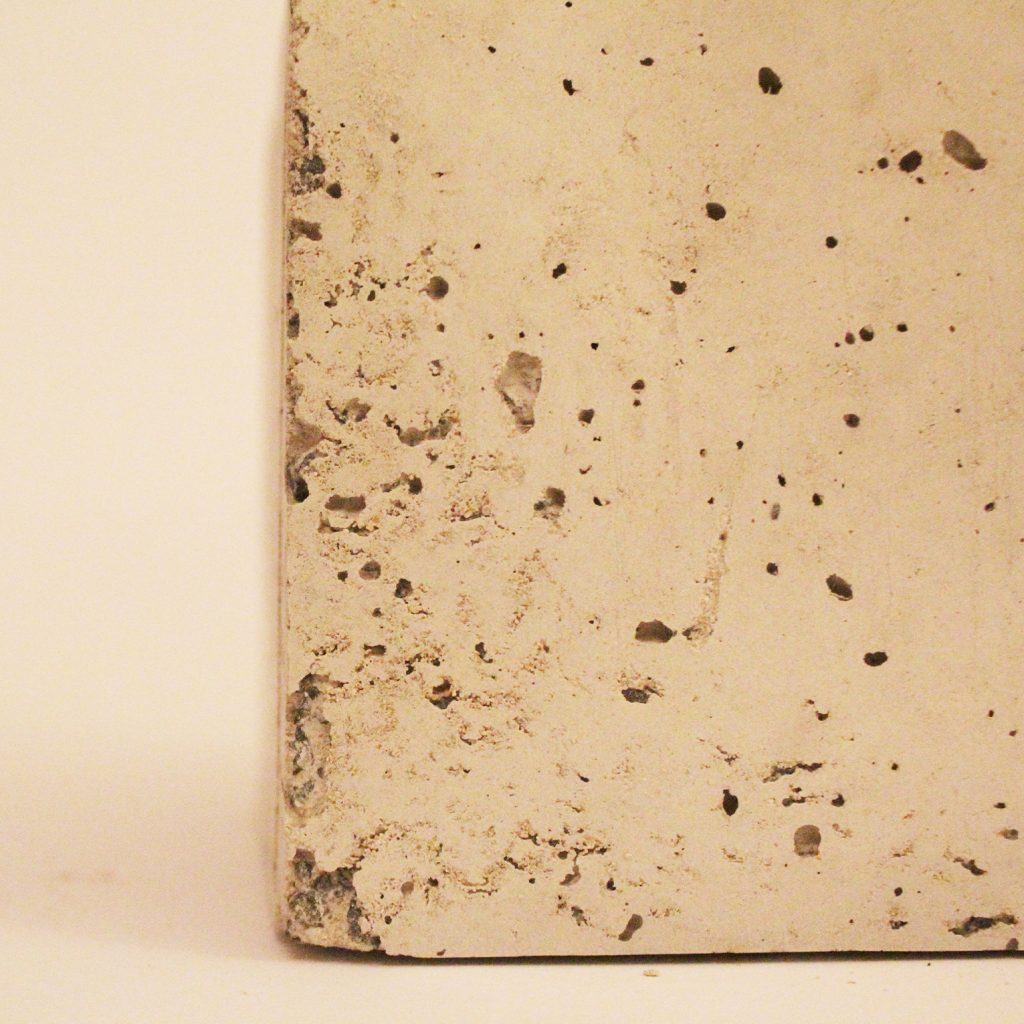
DuneCrete is ARDH’s desert-sand-based low-carbon concrete:
• Uses carefully graded desert sand as a major component, reducing reliance on imported river sand.
• Optimises the mix to lower cement content while maintaining required performance.
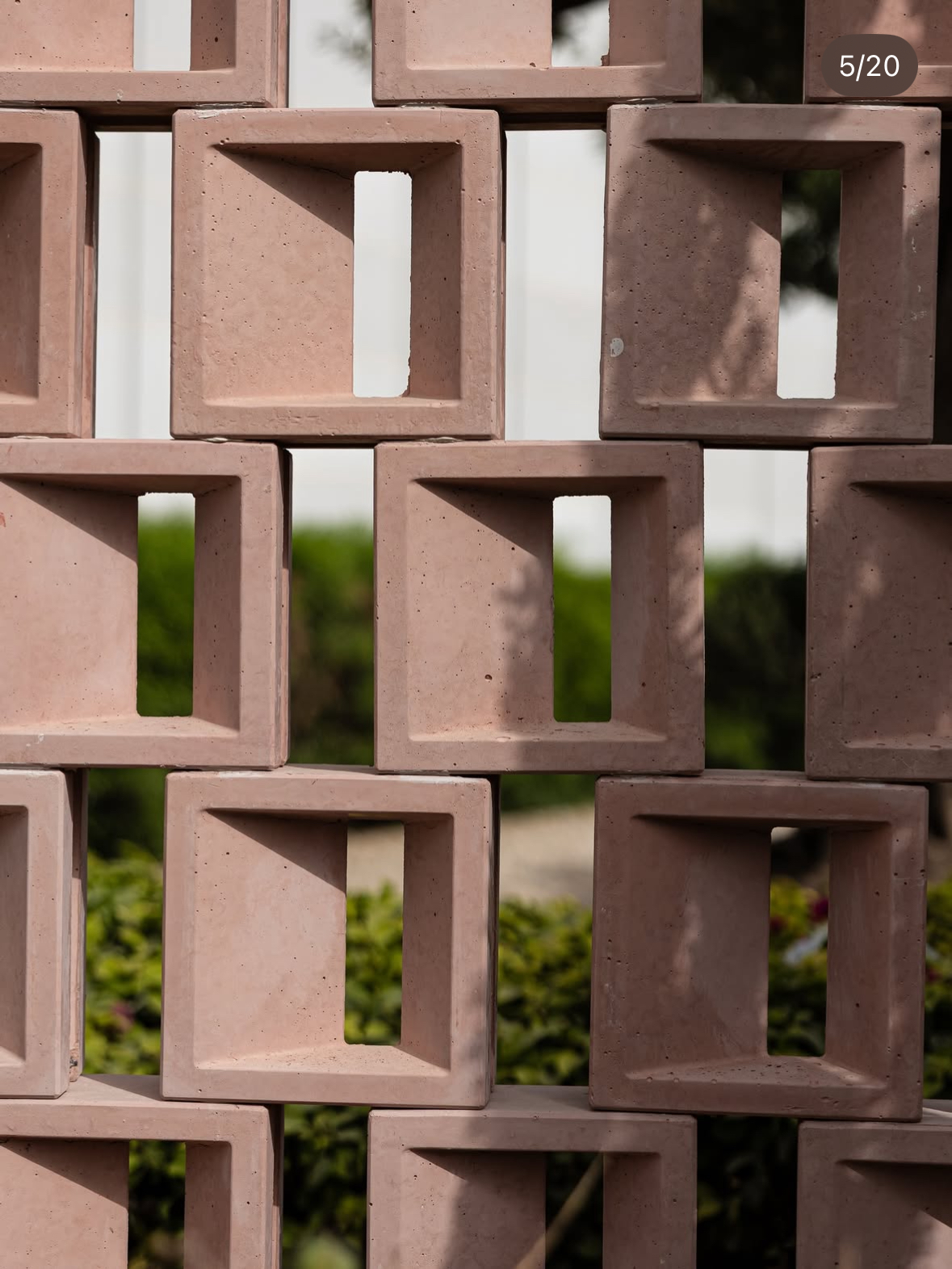
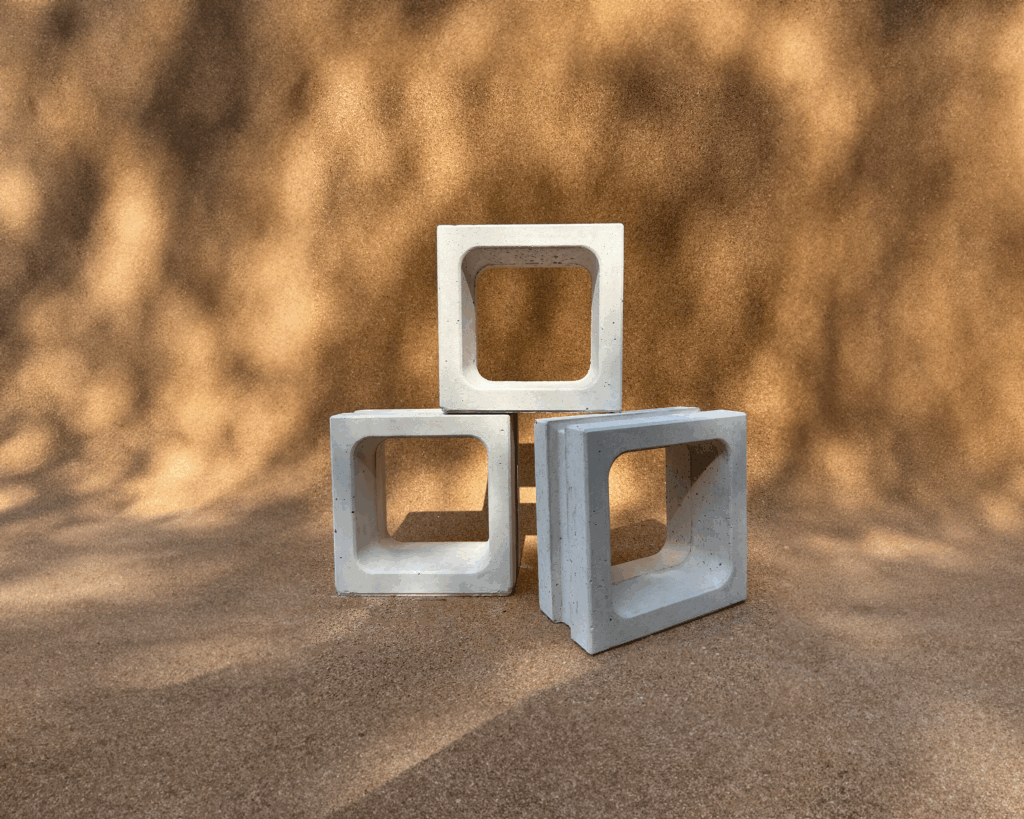
• Can be used as a cast mix, a 3D-printable mix, and as the base for DuneBlocks breeze / claustra units.
Where it fits in UAE projects
• Public realm and landscape elements – benches, plinths, planters, retaining walls.
• Façade screens and boundary walls using DuneBlocks.
• Selected structural or semi-structural elements, depending on engineering design.
2. Bio-based interior surfaces from date seeds (Dateform)
Globally, bio-based building materials are becoming a serious part of the construction conversation. In the Gulf, date agriculture offers a uniquely local resource: the date seed.
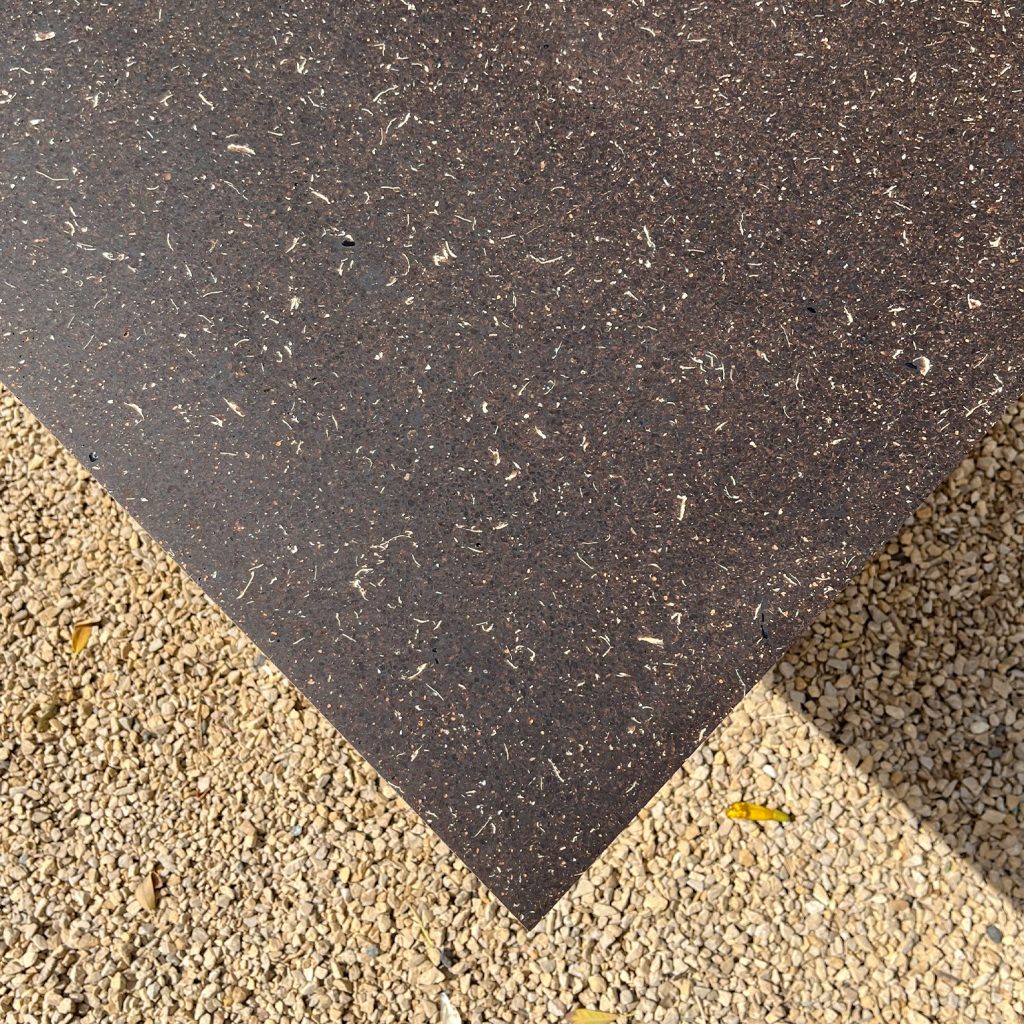
Dateform is ARDH’s solid surface material made from date seeds:
• Date seeds are cleaned, processed and formed into a 5 mm surface layer.
• This layer is bonded to birch plywood to create robust panels.
• Each square metre contains thousands of seeds, turning a waste stream into a visible, tactile finish.
Where it fits
• Wall panels and feature walls.
• Counters, reception desks and display surfaces.
• Furniture and shelving where material story matters.
3. Engineered boards from regional biomass
Across the region, manufacturers are also developing engineered boards from palm biomass and other agricultural residues. These boards:
• Upcycle agricultural waste into structural and non-structural sheet materials.
• Reduce reliance on imported MDF and particleboard.
• Work with familiar joinery tools.
They are strong options for joinery, wall linings and furniture where “eco-friendly building materials” are part of the brief.
4. Recycled and hybrid materials
The UAE also has an active ecosystem around recycled and hybrid materials, from recycled plastic composites to fibre-reinforced panels. Some are still experimental; some are already spec-ready.
ARDH’s focus is narrower and deeper: a small family of materials with strong regional logic that can scale.
How ARDH can support your next project
For teams exploring sustainable building materials in the UAE, ARDH offers:
• DuneCrete – desert-sand-based low-carbon concrete.
• DuneBlocks – breeze blocks made from DuneCrete.
• Dateform – bio-based solid surfaces made from date seeds.
We can share material packs, technical sheets and project references to help integrate these materials into concept, design development and specification.