
Breeze block wall ideas for shade, privacy & airflow.

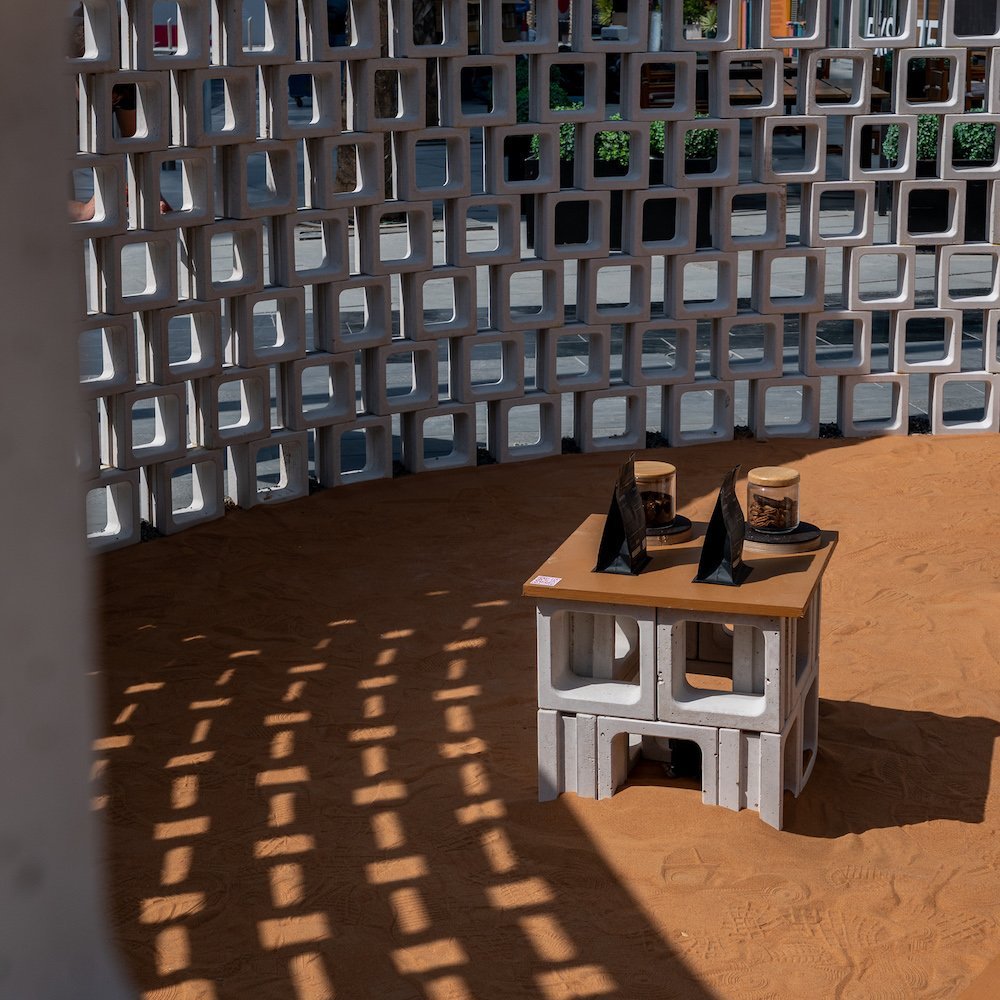
Breeze blocks, also called ventilation blocks, screen blocks or claustra, have returned to contemporary architecture and interiors. They appear in courtyards, façades, stairwells and gardens, reshaping light and air rather than simply closing spaces off. In hot climates like the UAE and wider Gulf, breeze block walls are more than a visual reference. When designed well, they deliver shade, privacy and airflow in one move.
ARDH Collective’s DuneBlocks take this familiar typology and remake it in DuneCrete, a desert-sand-based low-carbon concrete developed in the Emirates.
What breeze block walls do well
Good breeze block walls can solve multiple problems at once:
- • Shade – cutting direct sunlight while allowing diffuse light to filter through.
• Ventilation – enabling cross-breezes and stack effect, improving comfort without sealing spaces.
• Privacy – screening views without turning façades or boundaries into solid, defensive walls.
• Identity – creating depth, pattern and shadow that become part of a project’s architectural language.
These qualities make breeze blocks useful in residential, hospitality, cultural and public projects across the UAE and GCC.
Breeze block wall ideas by space
There are many ways to deploy breeze blocks beyond the stereotypical courtyard wall. A few starting points:
Courtyard enclosures
• Use breeze block walls to define courtyards while keeping them visually and physically open.
• Combine denser patterns at eye level for privacy with more open patterns higher up for sky views and ventilation.
Balconies and terraces
• Replace generic metal railings or solid half-walls with patterned breeze block balustrades.
• Set blocks slightly off the slab edge to create ledges for planting or integrated seating.
Parking façades and service yards
• Wrap car parks, MEP yards or back-of-house areas with breeze block screens that conceal equipment but allow air flow.
• Use pattern shifts or rotation to articulate long façades without adding complex structure.
Interior partitions
• Use breeze blocks as internal dividers in co-working, retail or hospitality spaces where filtered visibility and light matter.
• Combine with glass, timber or planting to create layered, semi-open zones.
Material choice matters: introducing DuneBlocks
Most commercially available breeze blocks are made from standard concrete with conventional aggregates and cement ratios.
DuneBlocks are ARDH’s alternative:
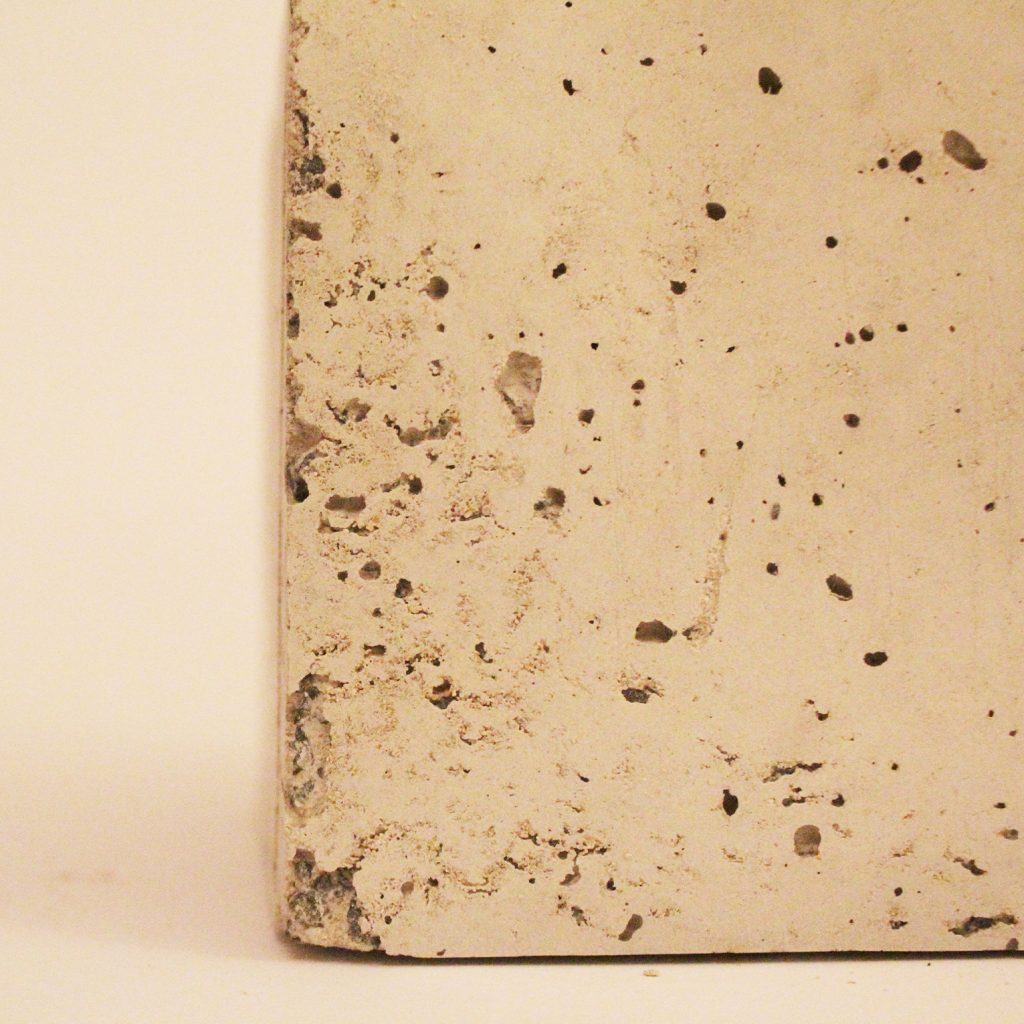
- • Made from DuneCrete, a low-carbon concrete developed around UAE desert sand rather than imported river sand.
• Designed specifically for hot climates where solar control, dust and thermal mass are real considerations.
• Manufactured as repeatable, spec-grade units that can be drawn, detailed and scheduled like any other masonry element.
This allows project teams to pair strong design language with a sustainable material strategy, instead of treating breeze blocks as a purely aesthetic afterthought.
Design tips for high-performing breeze block walls in hot climates
When moving from inspiration to construction, a few principles help:
Prioritise orientation
• Place breeze block walls where they intercept harsh sun while still admitting reflected and diffuse light.
• In courtyards, consider how walls will behave at different times of day and seasons.
Tune pattern density
• Use more open patterns where airflow is critical and privacy is less of a concern.
• Tighten the pattern or stack blocks differently where overlooking or neighbouring views are sensitive.
Coordinate structure and fixing early
• Treat breeze block walls as part of the structural and envelope strategy, not as a late skin.
• Agree on reinforcement, lintels, anchoring and tolerances with structural engineers and contractors.
Integrate landscape and lighting
• Pair breeze block screens with planting to soften edges, add shade and reduce glare.
• Use simple linear or point lighting to graze the surfaces and reveal depth and pattern at night.
These decisions turn breeze block walls from a decorative gesture into working environmental devices.
Using DuneBlocks in UAE and GCC projects
When DuneBlocks are introduced early in a project, they can simplify both design and delivery:
Applications
• Courtyard enclosures, garden walls and thresholds.
• Stair cores, balcony edges and semi-open corridors.
• Screens around parking, service areas and rooftop plant.
Workflow
• Treat DuneBlocks as part of the material palette from concept stage, rather than as a substitute for a generic block later on.
• Include DuneBlocks in façade and landscape packages so their structural and detailing requirements are clear to all parties.
DuneBlocks allow teams to deliver recognisable breeze block wall ideas while drawing on low-carbon concrete in the UAE through DuneCrete.
How ARDH can support your next project
For teams exploring breeze block wall ideas in the UAE and wider region, ARDH can provide:
- • DuneBlocks samples and pattern information for early design development.
• Technical guidance on wall build-ups, reinforcement and fixing strategies using DuneBlocks and DuneCrete.
• Coordination support to align DuneBlocks with broader decisions around sustainable building materials in the UAE.
DuneBlocks are designed to make high-performance breeze block walls a practical choice in contemporary UAE and GCC projects, combining shade, privacy and airflow with a material logic rooted in the desert.